
It has genuinely been a while since I wrote here. Perhaps that is why it feels particularly fitting that my return should start with one of those evening where you walk into a concert expecting music and leave having experienced something altogether different.
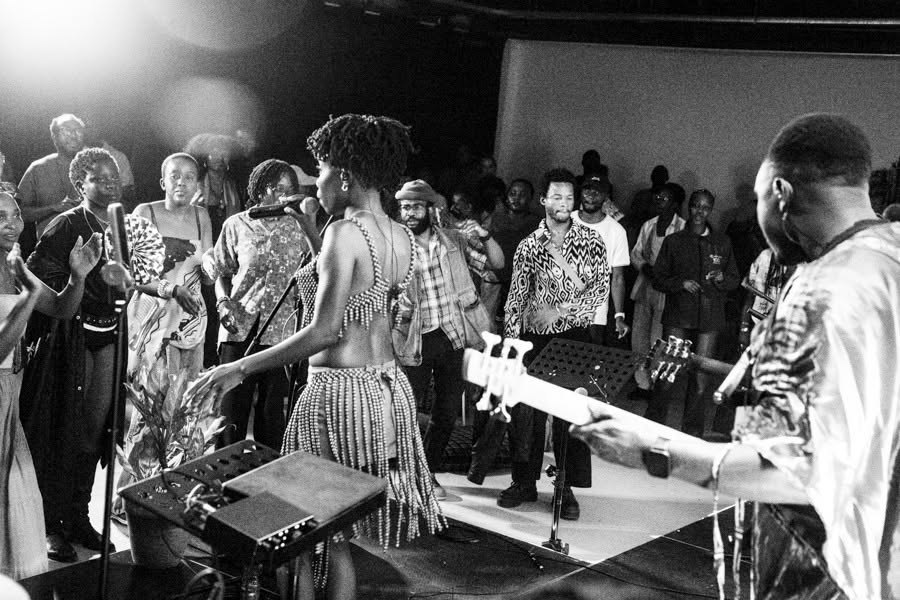
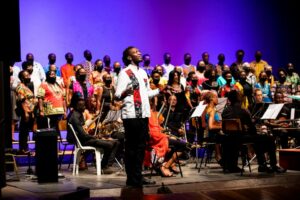
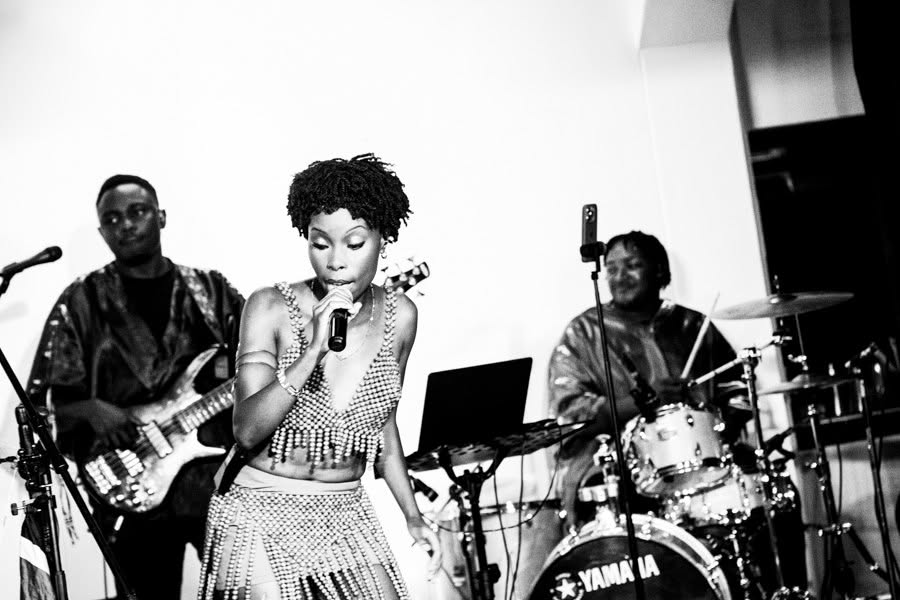
On 2nd October, a friend and I had the beautiful pleasure of attending the MobiArts concert at Goethe-Institut Nairobi, featuring Tommy WÁ, originally from Ibadan and now based in Accra, Ghana and Kenya’s own Orutu trailblazer, Labdi Ommes.
The concert did not start at the time advertised, which was slightly dismaying for reasons I still didn’t understand. And if you know, the Goethe-institut concert space, you know that adequate saying isn’t exactly one of its defining characteristics. As a millennial, whose back now has opinions, I was therefore faced with two options, stand and test my balance for the evening, or find somewhere to sit and let my bum go numb. I chose the siting option, my back suffered a little. Thankfully, the music made up for it.
Somewhere we only Go
It was my first time encountering Tommy Wa. Before the music even began, the MC presented us with a far more pressing culinary debate, does Senegal have the original Jollof rice, or does it belong to Nigeria or Ghana?
Apparently, Tommy Wa, being born in Nigeria and residing in Ghana, was supposed to demystify this great Africa culinary dispute. He did not.
Instead, he walked onto the stage, picked up his guitar and took us somewhere else entirely different.
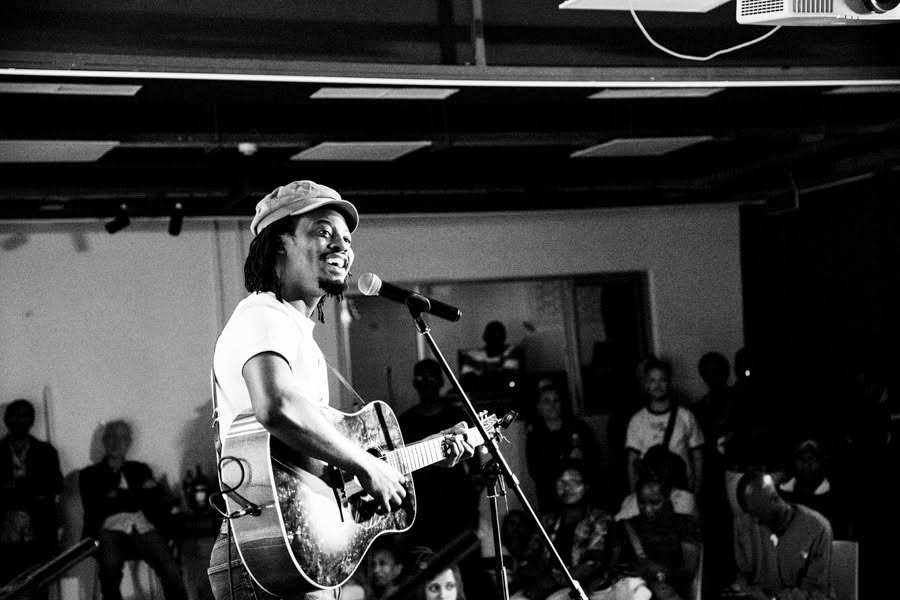
Honestly, there is an enigmatic wave to Tommy Wa’s performance. His music doesn’t immediately announce itself to you, it draws you in. Somewhere in those opening songs, I found myself caught by a refrain that felt both hopeful and kinda reassuring, this idea of somewhere we go, somewhere beyond what we can see now.
Much of his set drew from his EP, Somewhere We Only Go, and there was something about the way he narrated the music that stayed with me. At some point, I realised that Tommy WÁ sounded a little like one of those prophetic preachers at best, prosperity evangelists who promise riches in heaven, although he was preaching through his music and lyricism.
As human beings, we seem to spend an extraordinary amount of our lives waiting for beautiful things to unfold. Tommy’s music seemed to sit in that waiting. It had a subtle way to point to something worthwhile on the other side.
That felt poignant, because this performance also marked his 10th anniversary as a recording artist. There he was, ten years into his own journey, standing in Nairobi and singing about patience, movement, and where it is we are all trying to go.
There was a beautiful dynamism in his storytelling. One moment his voice carried the room, the next it was just him, his guitar and a story. When Eric joined him on percussion, the sound opened up again.
By the end, Tommy had transformed the Goethe’s auditorium into something bordering a small revival and a number of people had stood to dance along to his music, “God loves when you’re dancing, he sang….”Dance to patience, dance to kindness, dance to love, dance to faithfulness, dance with laughter, dance some more”.
And then came that familiar biblical refrain, “when the spirit of the lord comes upon my soul, I will dance like David dance”.
At this point, I was standing too, and I wasn’t entirely sure whether I had attended a concert or accidentally joined a very musical church service on a Friday night.
Before leaving stage, Tommy was joined by Labdi Ommes for a beautiful ode to give people their flowers while they are still here to receive them. It was such a perfect handover, because Labdi came on stage.
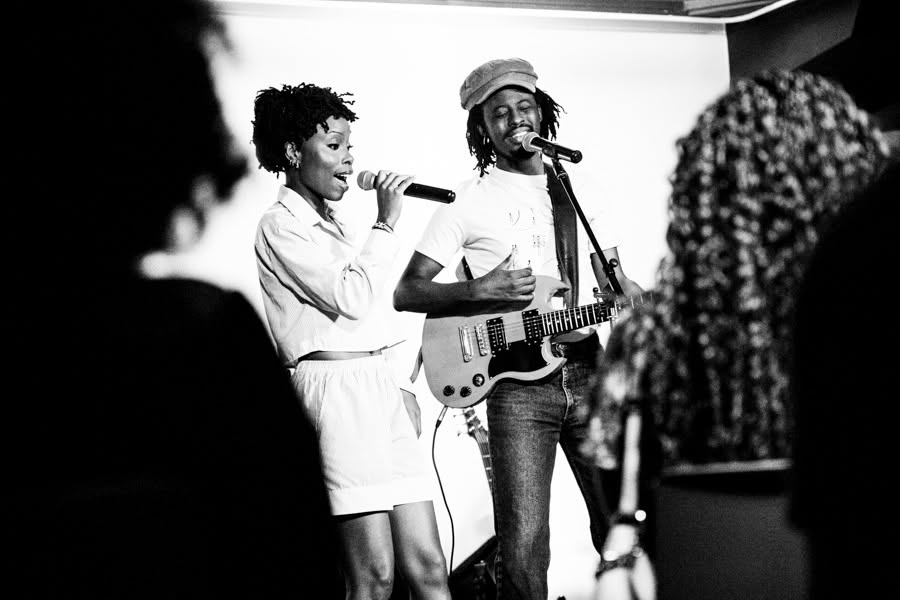
And then, Labdi rebelled
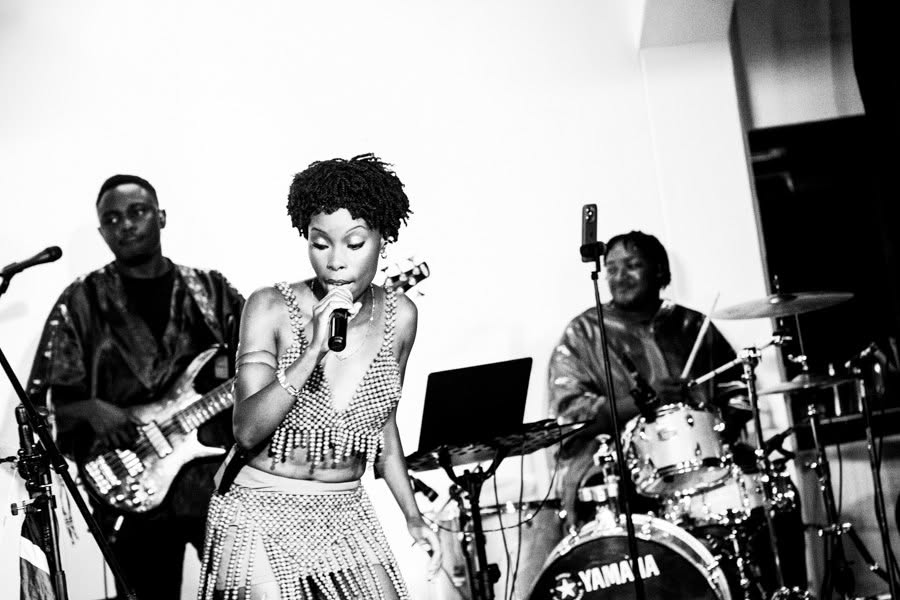
If it was anyone’s first time seeing Labdi Ommes perform, I imagine they were slightly bewildered in the best possible way.
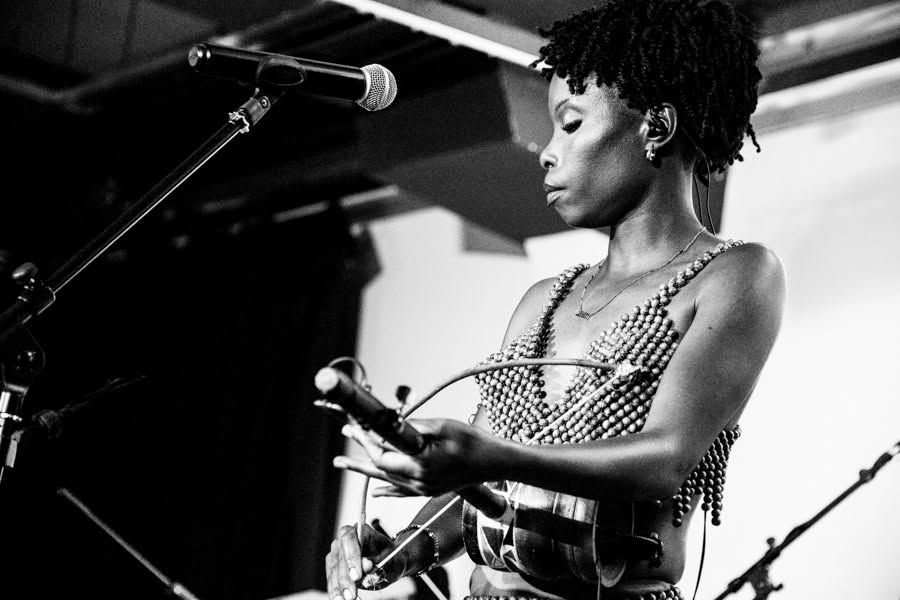
Labdi is a rebel on stage. Her instrument of choice is the Orutu, the one-stringed fiddle from western Kenya that was traditionally played by men. Labdi discovered it while studying fine art, and has spoken before about learning that women are discouraged from playing it.
Watching her perform, you understand why the history matters.
There is something incredibly human about the sound of the orutu. It cries, it pleads, and in this moment it seemed to protest. In Labdi’s hands, it occasionally feels as though the instrument is arguing back at her. Then her voice chimes in. It is commanding, at times haunting, and occasionally wonderfully unruly.
On this particular evening, that became apparent when the music turned towards a form of politics and resistance.
Then came Jawanya, satirical and uncomfortable in the way good protest music often is; the song turns it gaze towards greed, corruption and exploitation in society.
Kenya is once again approaching a political season, and perhaps, we need these reminders. Reminders we must demand better from our county and country parliamentarians. Reminder that leadership is supposed to serve people. Reminder that resistance has always had its own soundtrack.
Labdi predominantly sings in Dhuluo; you don’t necessarily need to understand every word every word to understand the music.
Listening to her that evening, I found myself imagining that we had somehow left Goethe-instute to the shore of Lake Victoria, listening to stories carried through generations.
We moved from Pakruok to Winjauru and even Ayaye…whatever contemplative mood we had been in disappeared rather quickly. Waist began moving, mine included.
I’ve watched Labdi’s music evolve over the years, there is something wonderful about encountering an artists at different points in their journey and realising the sound has grown with them.
Somewhere between Ghana, Nigeria and Nairobi
As we parted ways that evening, I kept thinking about the unlikely pairing we just experienced. Two artists whose music didn’t necessarily require us to understand every language or reference to understand what they were trying to make us feel.
Maybe that is what exceptional live music does. It transcends language. It moves through culture, politics and whatever happens to be occupying our minds that week, and for a couple of hours puts a group of strangers into the same story.
Jazzsymphonic has been quiet for a while, but sitting there, numb bum and all, listening to Tommy Wa sing about going somewhere and watching Labdi pull another world out of a single string, I remembered why I started documenting these musical experiences in the first place.
Some nights deserve somewhere to live after the last note has been played.
This was one of them. Happy to be back.
About Mobi Arts
The concert formed part of Mobi Arts, connected to Goethe-Institut’s work supporting international cultural exchange and artistic mobility. Culture Moves Europe supports artists and cultural professionals to travel, collaborate and develop projects across participating Creative Europe countries. For more information, visit
Photography by Quaint